Bin Delivery System for
Montgomery County, Maryland
A tool that streamlines internal processes for delivering recycling bins.
Timeline
Sep'23 - May'24
Role
Project Facilitator | Product Designer
Team
3 Designers | 2 Developers | 1 DEP Head
Context
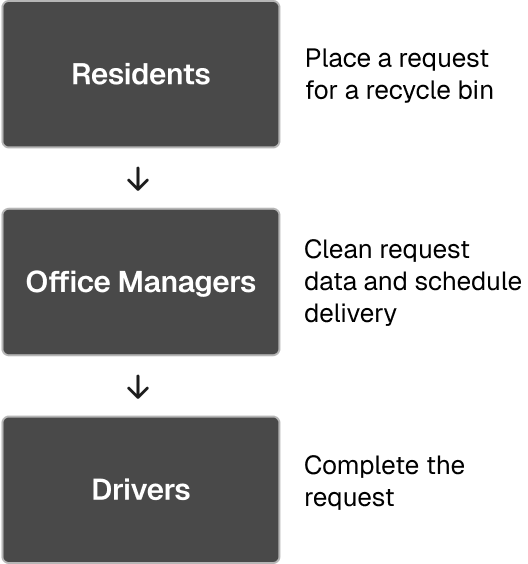
The Department of Environmental Protection (DEP) in Montgomery County, Maryland, manages the distribution and replacement of recycling bins across the county.
We partnered with the county to design an internal tool that resolves time-consuming inefficiencies, enhancing employee satisfaction.
The Challenge
Developing a solution in 9 months while navigating government constraints such as security requirements, budget limitations, and limited employee resources, while navigating multiple layers of authority.
“It takes usually an hour or so to complete the whole process, depending on how complicated it gets”
The current scheduling and delivery process for the Department of Environmental Protection (DEP) involves five separate software tools and significant manual work. Residents lack easy access to request updates, and even when they call the 311 center, operators often have outdated information.
The Solution & Impact
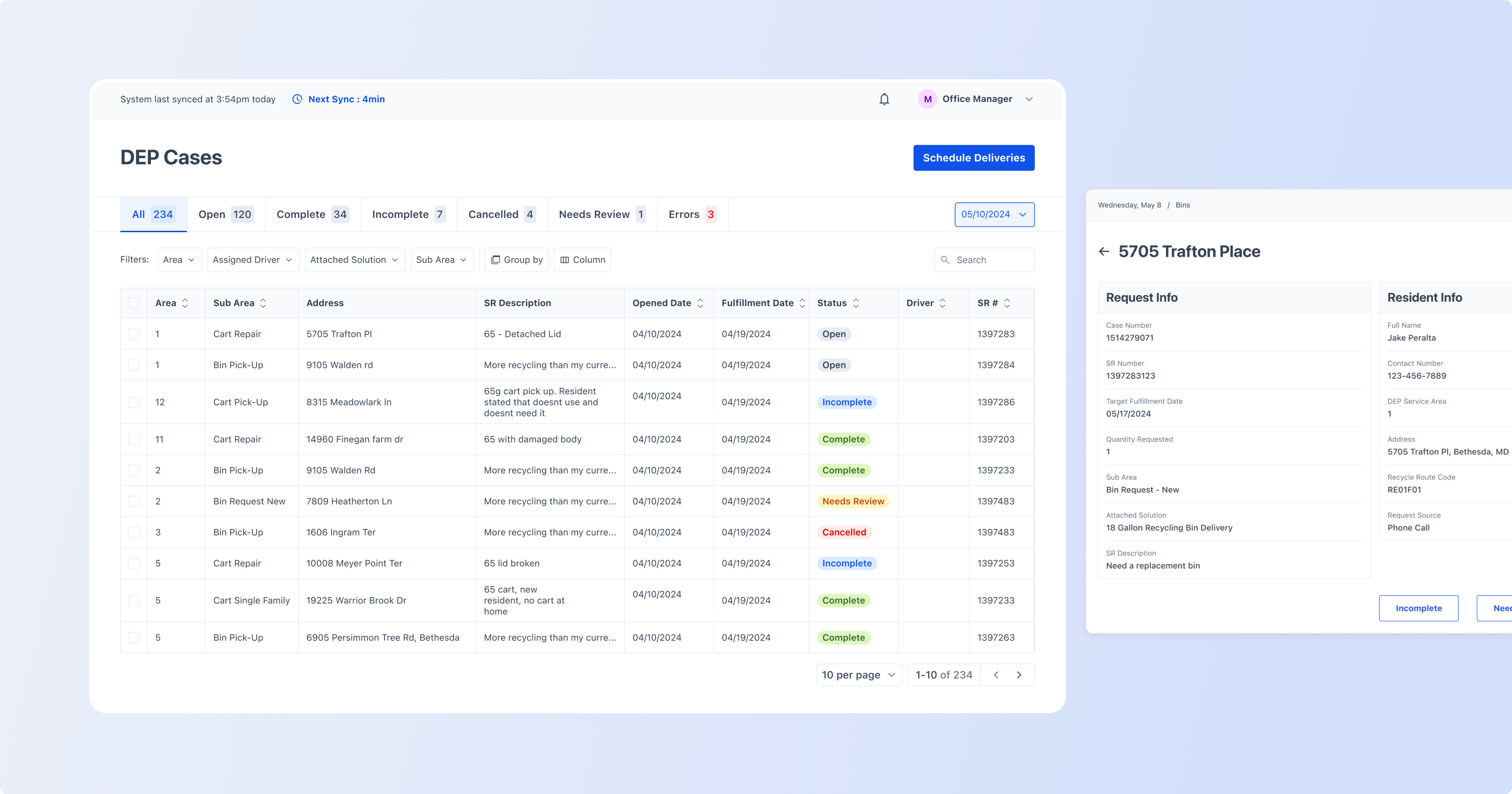
We developed a robust integrated tool to streamline inefficiencies in the county's 311 processes, including data cleaning, scheduling, and driver experience.
Eliminated External Softwares
Reduced the number of applications used from 5 to 1 by improving integration flow.
Reduction in Steps
40% decrease in the number of steps needed to complete the processes.
Customer Communication
Improved communication time between the residents and the team from 48 hours to 20 min
How did we get to the solution?
Understanding the process
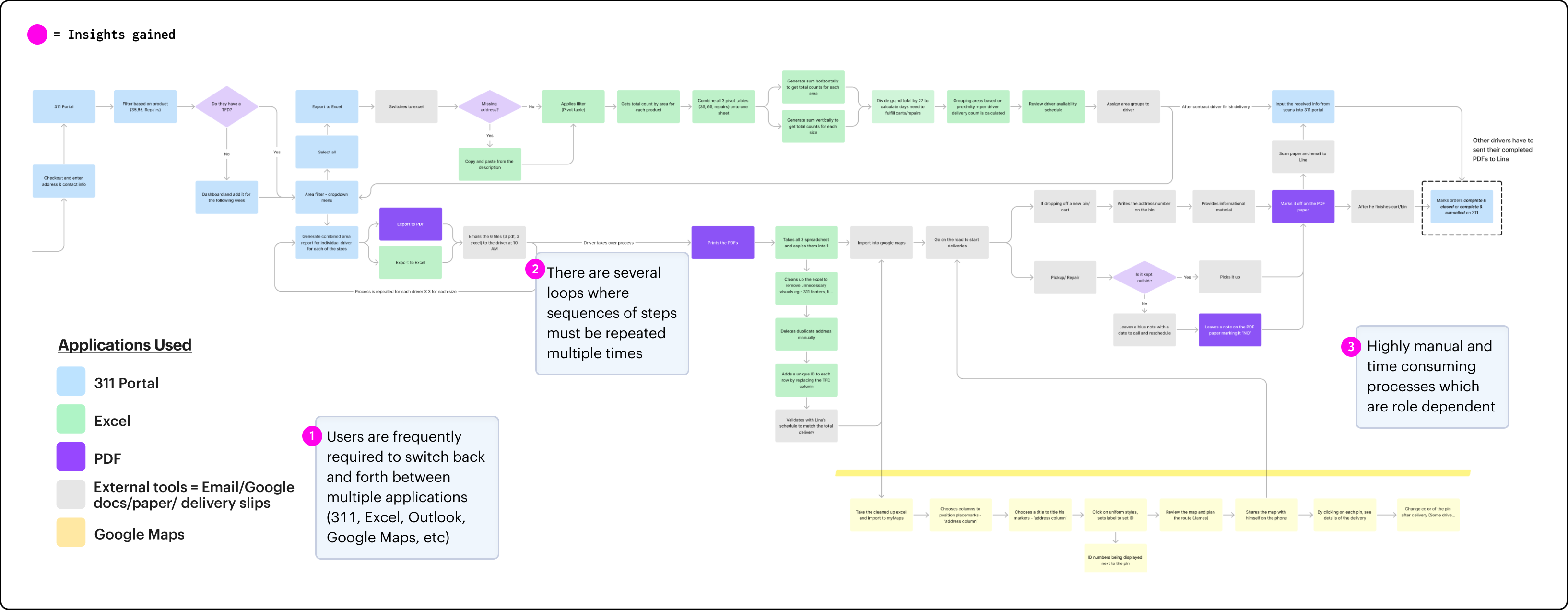
I led the development of a color-coded workflow diagram based on current processes.
This end-to-end, software-based diagram helped pinpoint friction points in the process.
Mapping the pain points
Complicated Scheduling
Scheduling in 311 is challenging due to the county's setup and software limitations, resulting in a reliance on complex Excel formulas each week.
Optimized route planning
Addresses are manually entered daily into Google Maps by each driver to plan routes, resulting in cognitive load and information burden.
Reduce manual and repetitive processes
Each order is manually cleaned and reviewed using external software before generating reports for drivers, who then reorganize the data to meet their specific information needs.
48 hours delay in communication
Each step during delivery is documented on paper, leading to delayed communication with both the office and residents. Residents are not notified about order updates, until the system is updated.
Landscape Analysis
We defined key features, surveyed the software landscape, and analyzed over
30 data processing and routing tools, including their integration with 311
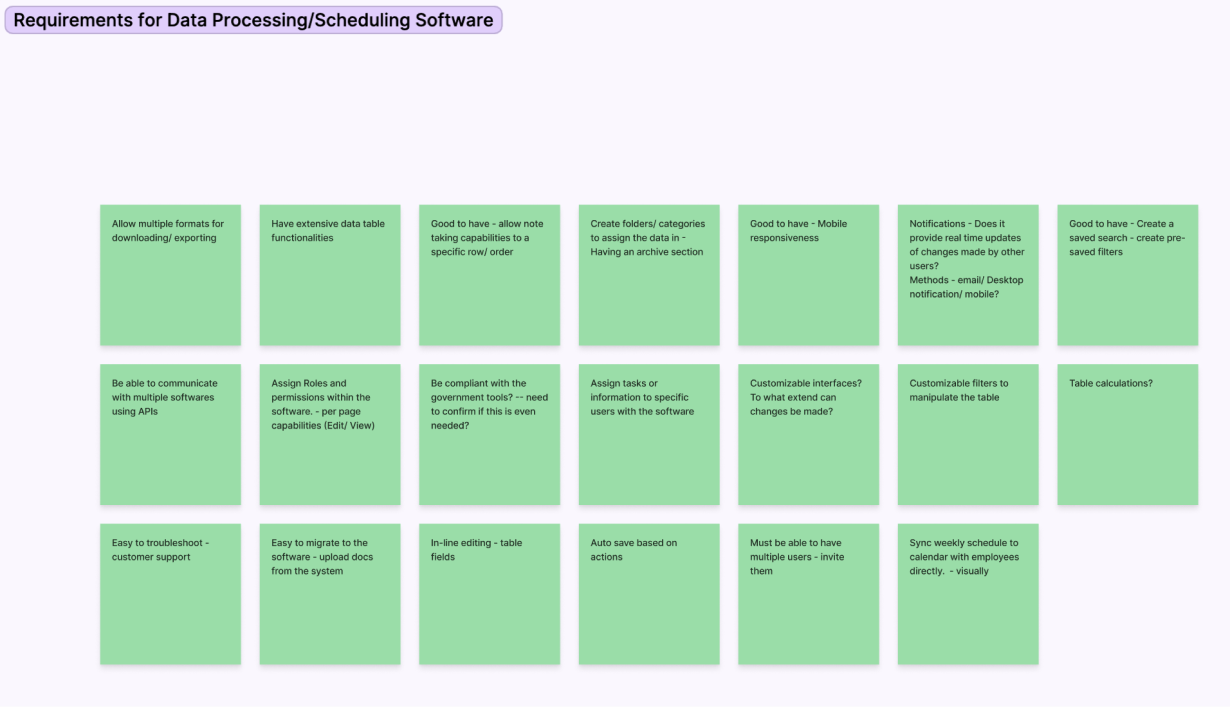
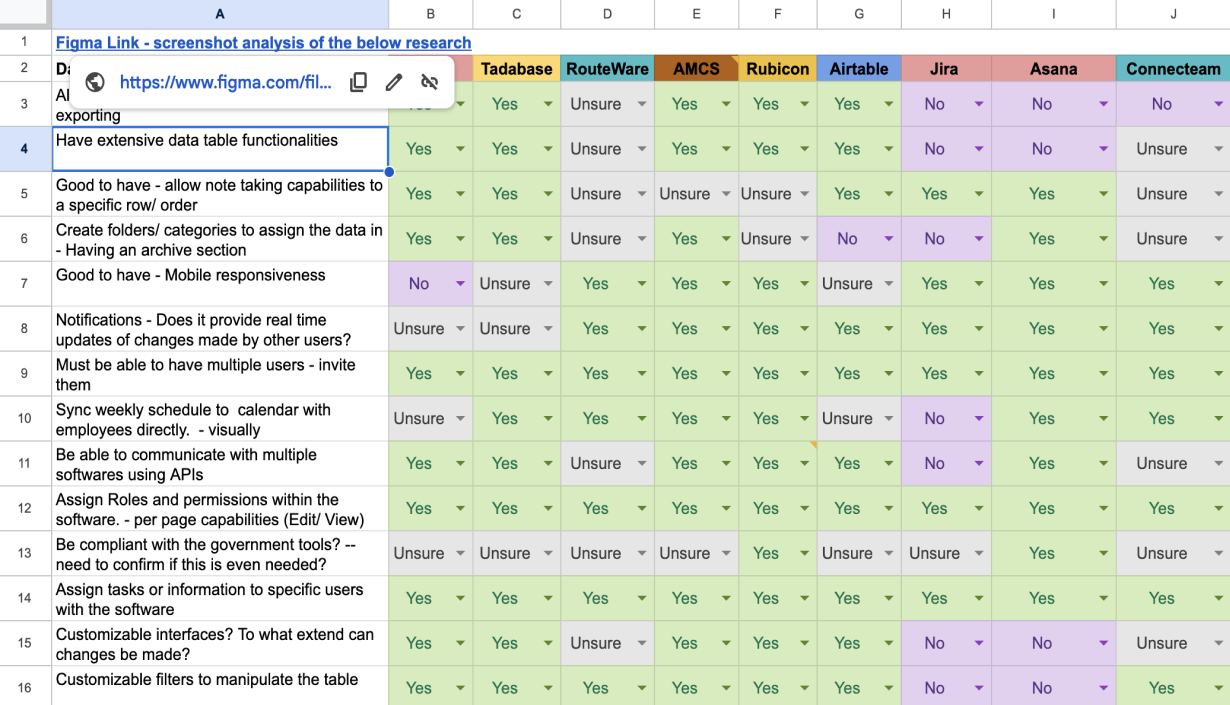
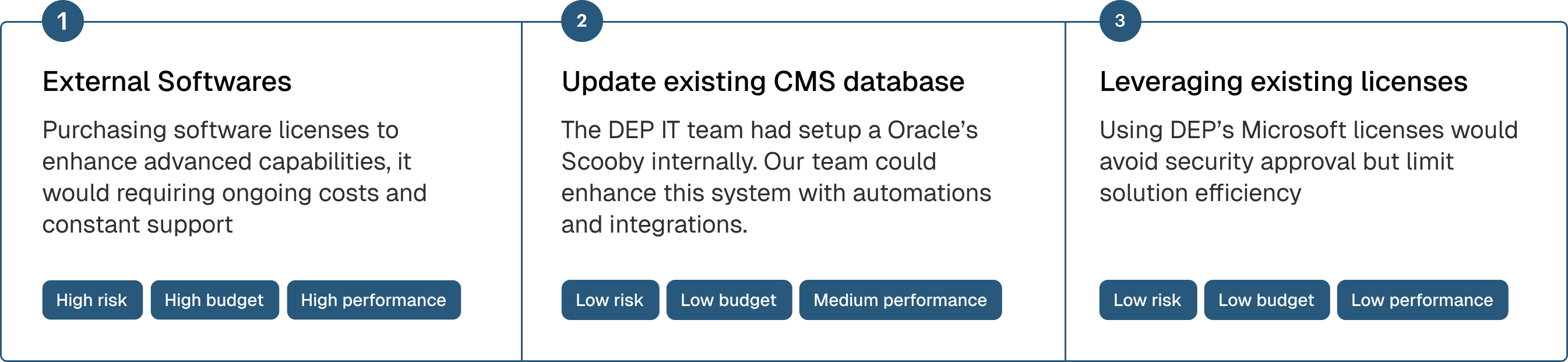
The landscape analysis and internal constraints led us to identify
three strategies based on a cost-benefit analysis, aiming to maximize impact within our budget, time, and resources.
Navigating changes
Organizational shifts left us without a decision-maker for three weeks, creating uncertainty about the project's budget, management, and future.
New management revealed that budget approvals would be granted only in the financial year 2027, a critical turning point for the project.
Focusing on the Problem,
not the Product.
Keeping in mind the main problem of our users, we proposed Option 2 - to build on their exisging CMS, which provided optimal security, efficiency, and platform longevity.
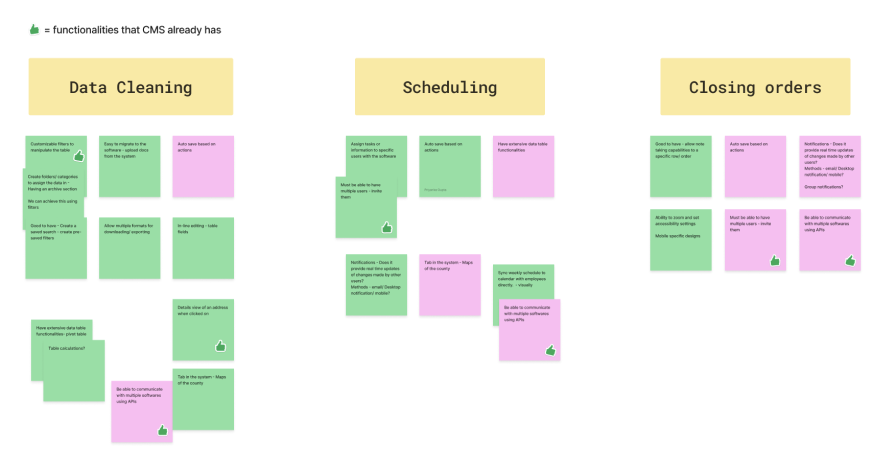
We used our findings to redefine the existing architecture of the CMS by creating a new flow to achieve our goals and highlight the system’s improvements.

Accessibility at it's core
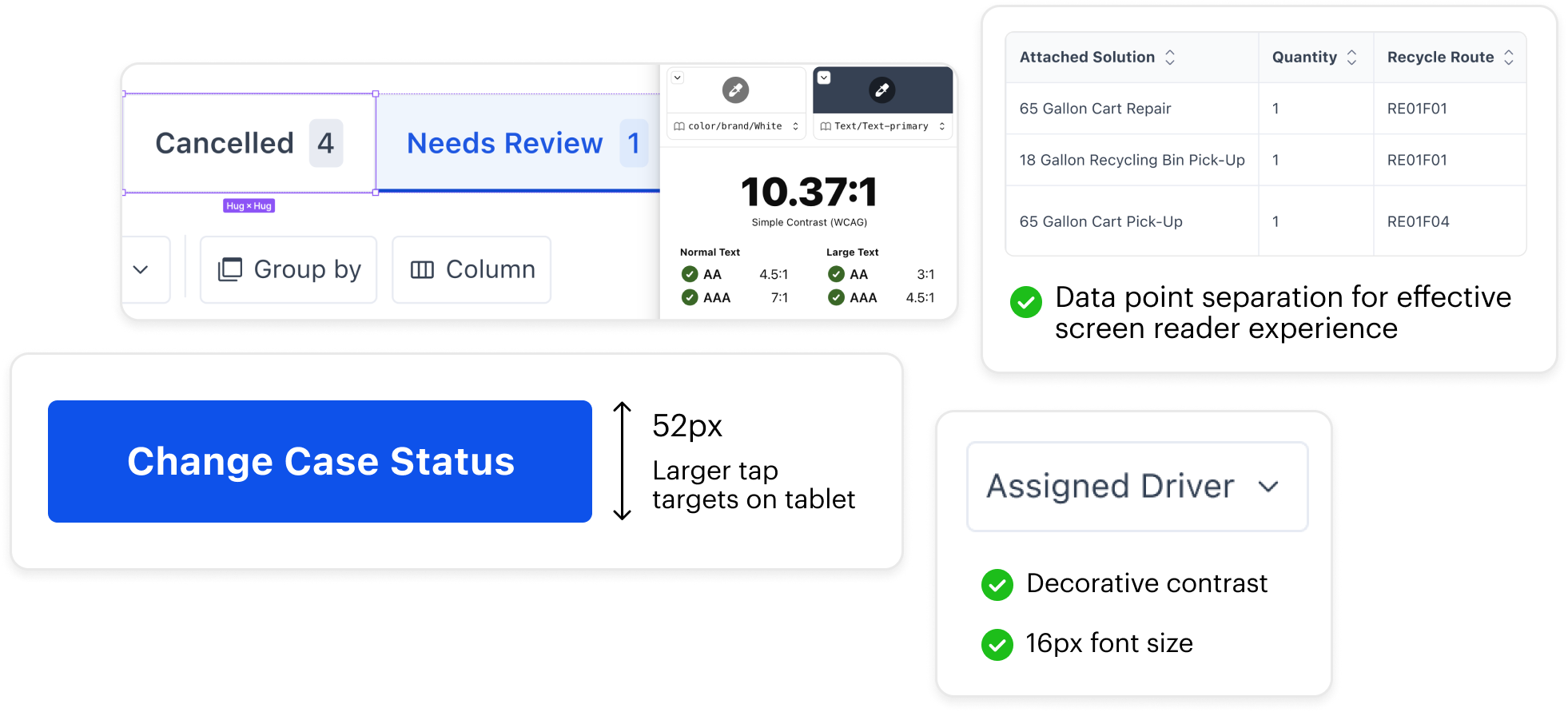
With users aged 20 to 55, we aimed for inclusivity and accessibility.
I led the visual design, adhering to W3C principles to develop the tool’s design guidelines.
ITERATIONS
Immersing our users in our process
We conducted two rounds of usability tests using both low and high fidelity screens. We used our user goals to create task scenarios for these tests, with the main aim of the following.

Determine the time taken to find information
that aids in closing orders in the field

Assess the flexibility of table features for data cleaning

Evaluate the ease and usability of scheduling and assigning cases to drivers
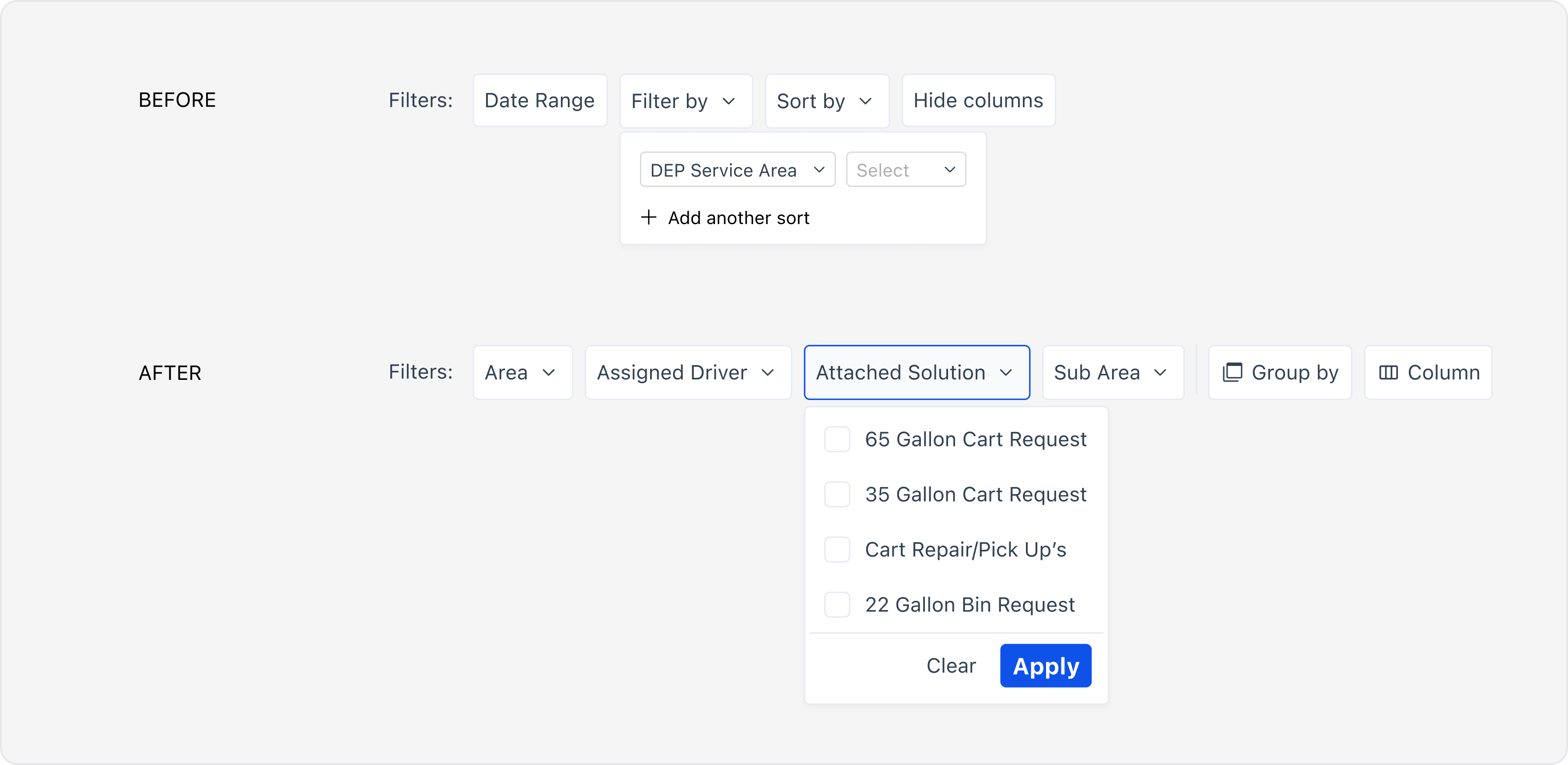
Data filtering simplified
Initial designs included advanced filtering, but user testing revealed confusion and errors with edge cases. The updated design allows users to manipulate data across flexible parameters, including date ranges, improving decision-making and reducing errors.
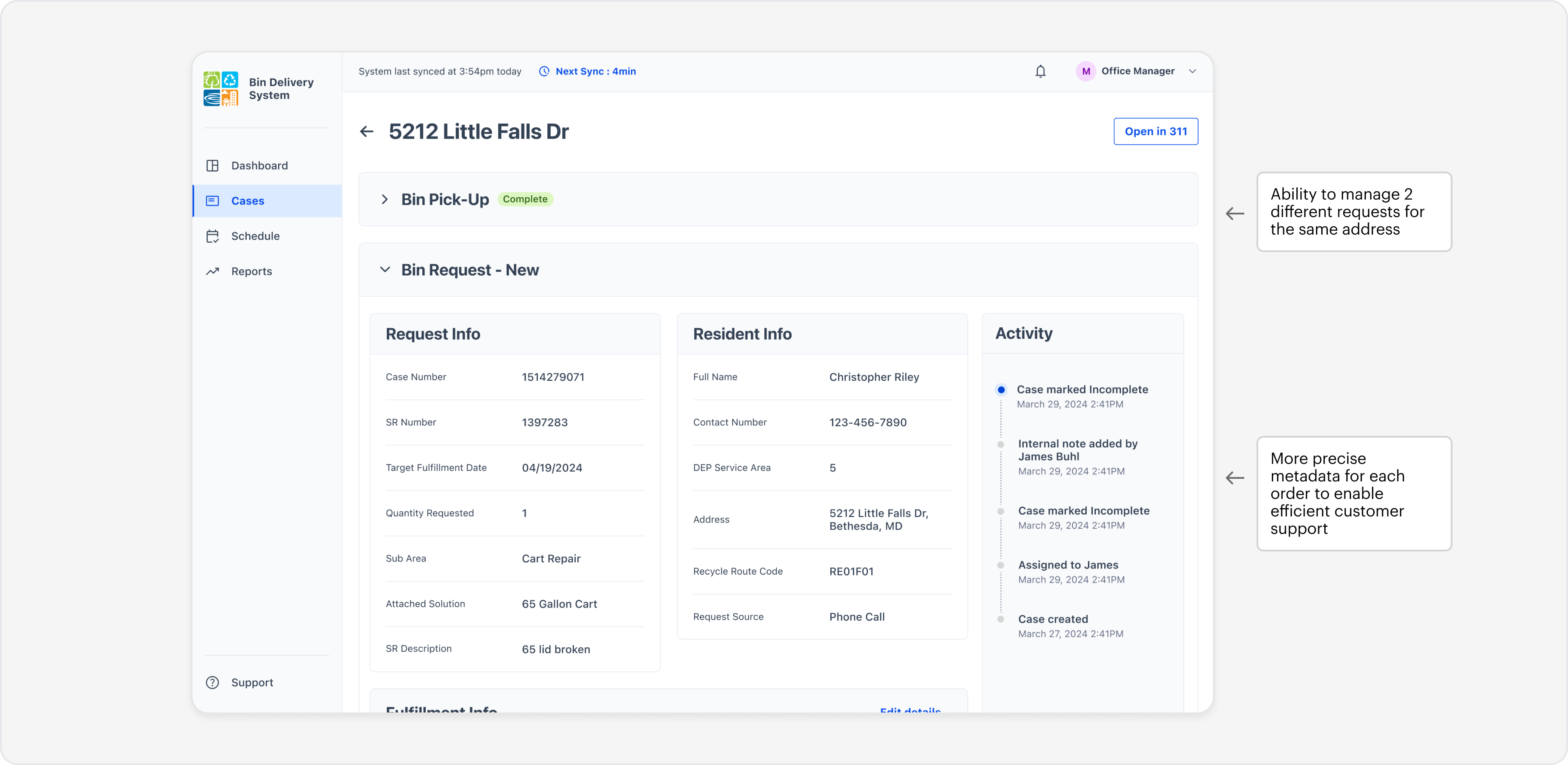
Grouping addresses
Residents submit separate requests for pick-up and delivery, generating 2 unique requests, but drivers handle them as a single stop. By grouping requests by address instead of service ID, drivers can efficiently manage multiple requests at once.
Final Features
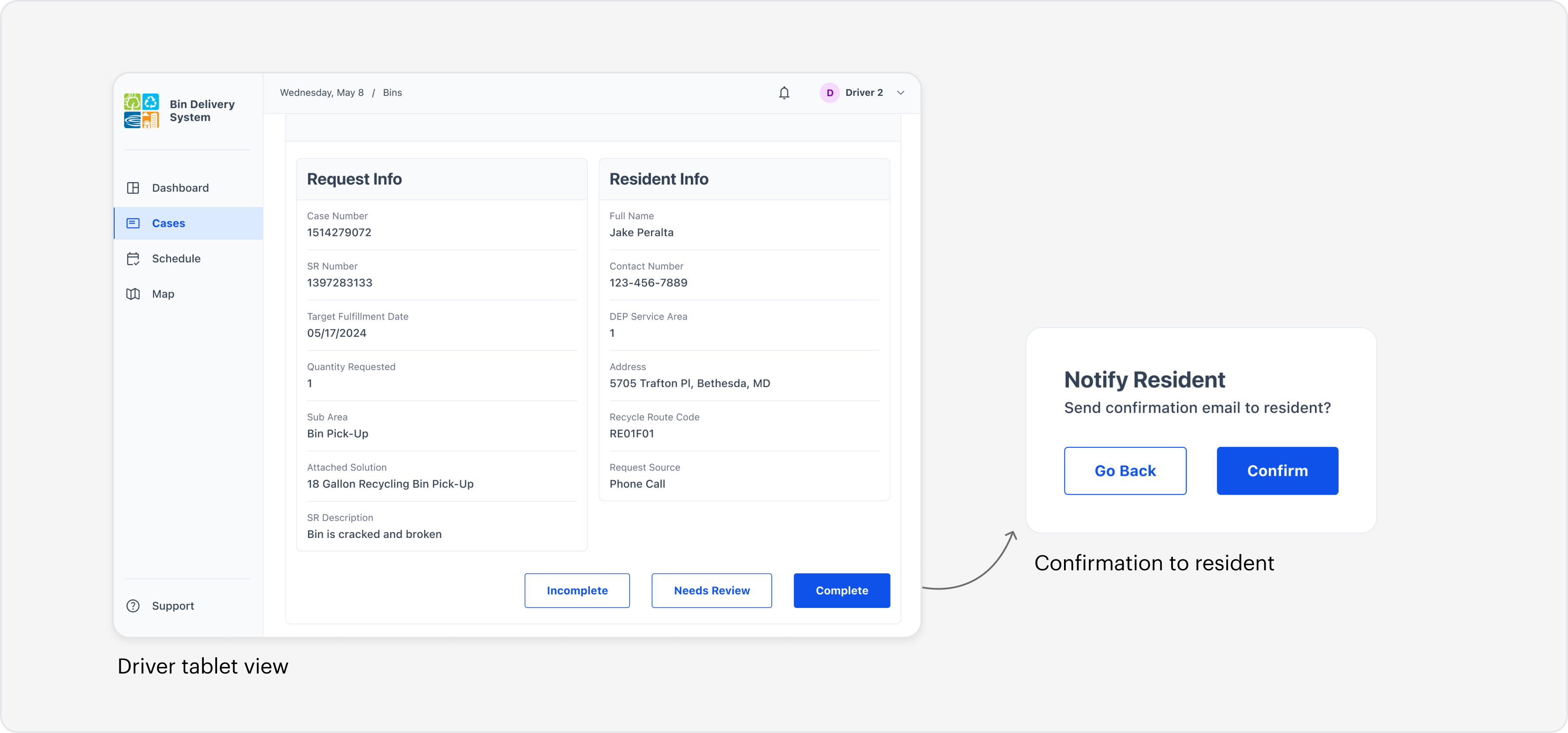
Real time Resident Notification
Due to paper tracking, residents were informed of their deliveries more than 48 hours later, which hindered timely troubleshooting. We developed an additional API within 311 to enable confirmation emails to residents, reducing communication time from 48 hours to 20 min.
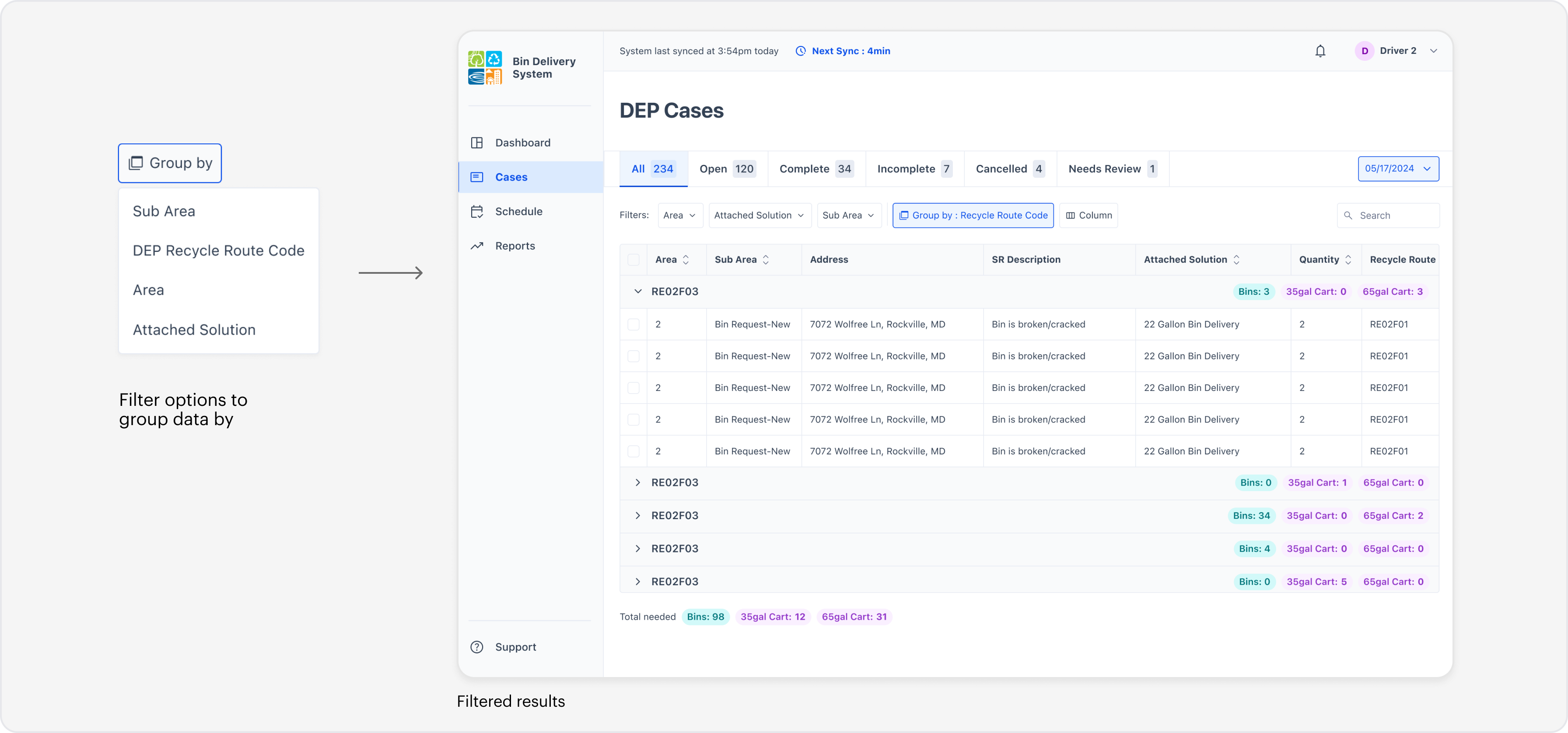
Table Features - Group By
User testing showed that each driver used unique data from the delivery plan to remember key details and build efficient routes. We used this insight to help drivers plan more effectively.
Scheduling algorithym
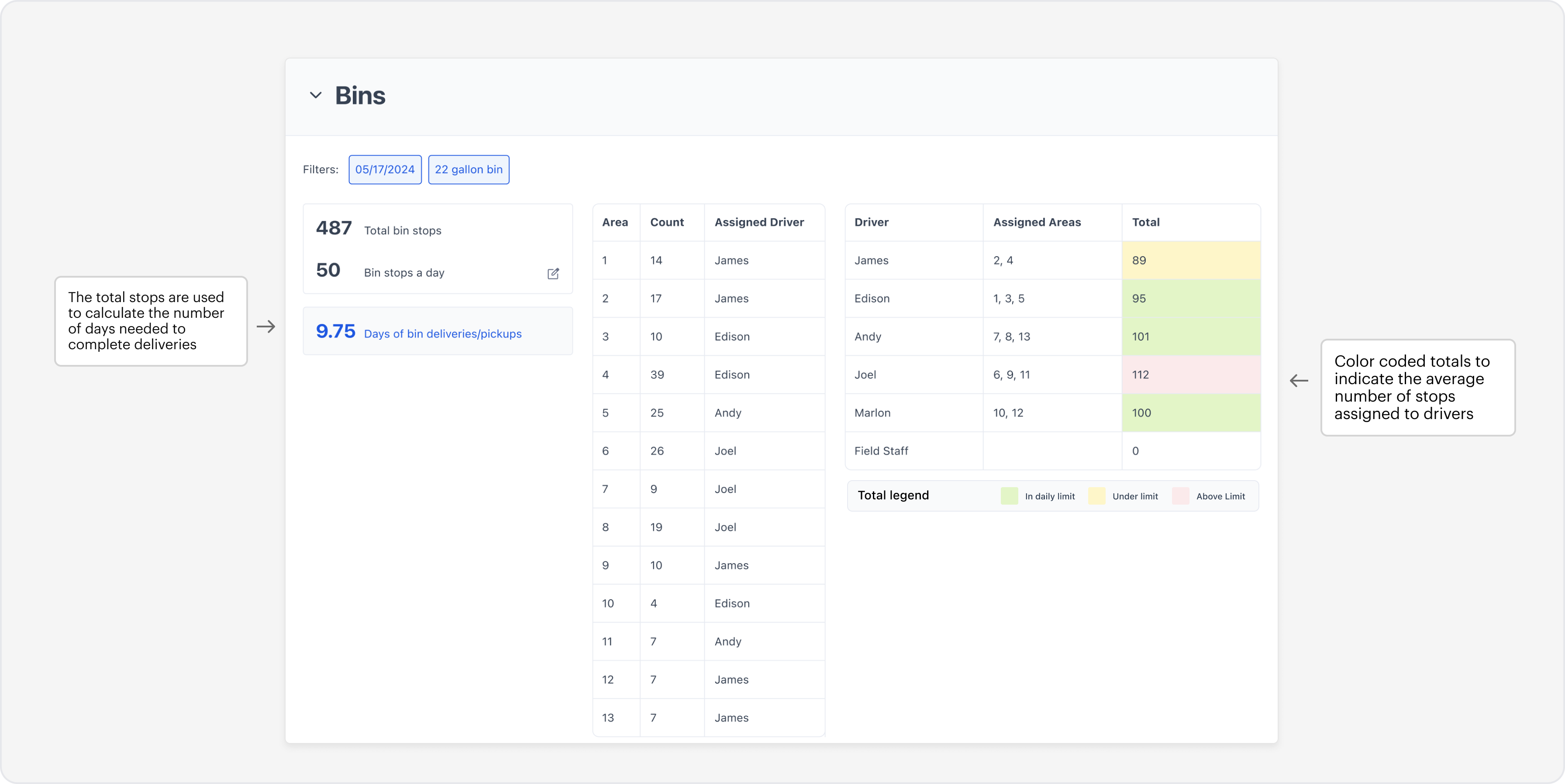
We introduced a color-coded scheduling mode to help office managers assign areas in real-time, reducing the mental burden of workload distribution. The system also sends drivers their assignments all at once.
Project Takeaways
LEARNING TO PIVOT QUICK
Constant changes pushed me to grow during times of uncertainty, I always needed to adapt to new or sometimes lack of business and governmental requirements
LEARNING TO LEAD DESIGN
Being the seasoned designer on the team, I learned how to balance stewardship and ownership throughout the project
LEARNING ALIGNMENT
The project's vagueness and the diverse backgrounds of the team members pushed me to deepen my understanding of terminology and process alignment